
Okay, that may be a bit of a click-baity title. But hear me out.
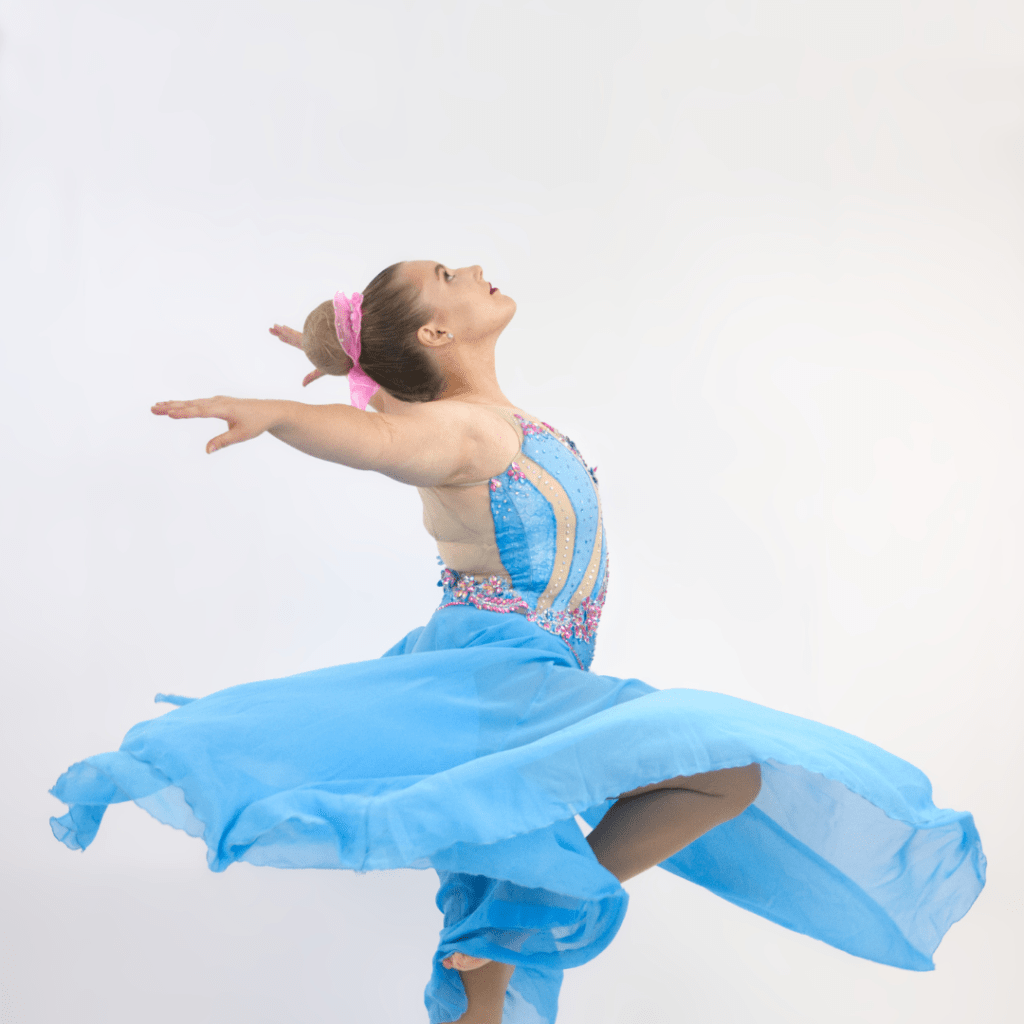
I love the graceful solo season. It’s one of my favourite items to coach and perform, and the prestige and excitement around this time of the calisthenics year is unlike anything else.
However, I am concerned for many different reasons about the amount of regional competitions that are popping up in South Australia for 2024.
At the moment, there are 9 separate regional competitions for participants in South Australia to perform their graceful solo. All but two are offering all age groups and divisions, with the two comps held at the Royalty Theatre (our primary theatre in South Australia) splitting the sections between both competitions. This means that including divisional grading performances and final competitions for CASA, a student could potentially cross the stage ten separate times between March and May.
On one hand, this is fantastic. It is giving the students a chance to perform, which is a huge aspect and point of difference between calisthenics and other sports. They are learning to compete and are gaining confidence in a way that only performing can give you. They have the opportunity to receive accolades for their hard work, and are getting crucial one-on-one training that they don’t receive in a typical team lesson. However, I feel as if the downsides outweigh the positives in this case, and here’s why:
First of all, graceful season is expensive. At an average cost of $30 per entry, parents could be spending upwards of $300 just to enter one child in competitions for a season. Adding onto this, the money for audience tickets, travel expenses (particularly for those who are regional or interstate), and ad hoc expenses at the theatre (e.g stage photography/videography) adds up quickly. Not to mention the vast majority of parents who have multiple children in the sport doing calisthenics. Thousands of dollars are spent during this season, and can cast a financial burden on competitors and parents.

If money isn’t an issue, another issue is the fact that these competitions and practices take up a lot of free time. For parents, coaches, and adjudicators, huge chunks of time are taken up with graceful competitions, both time at the theatre and working practices around competitions. As a coach, finding time that my students are available, the hall is available, and I am available is almost impossible as it is, and adding competitions (sometimes two in one weekend) diminishes this time exponentially. In one week, I can spend multiple hours at calisthenics, solely for graceful competitions. This is not factoring in team commitments and time spent outside of lessons creating music, doing hair and makeup, and sitting in the audience waiting for the next section to end so the presentation can commence.
Whilst adjudicators are paid for their time, they are a finite group of people. Years of training goes into becoming an adjudicator, and unfortunately there are not enough to cover the amount of competitions for a whole season as regional competition numbers grow. Not only is this putting a strain on our adjudicators, this is also a disadvantage on the performers, who may have the same adjudicator multiple times in a season. The routine is no longer fresh to the adjudicators, and differing scores from the same judge can be misconstrued and hard to explain, although the competition and performances could be completely different from week to week (or even day to day!). This can affect a student’s self esteem and may develop contempt for certain adjudicators, even though they can’t help seeing the same competitor at multiple competitions.
Most importantly, it is a huge mental and physical strain on the competitors. Ever heard the term ‘peaked too early’? With this many competitions in a season, plus the extension of the graceful season in general, many competitors will be burnt out before CASA finals commence. Keeping your body in competition form for 6+ weeks in a row is extremely damaging, and may lead to injury if fatigue starts to set in. Mentally, the pressure of competing week in, week out can also take a toll, on competitors, coaches, and parents alike. It is already difficult trying to explain to a child or an inexperienced parent how points can differ from competition to competition, and the more times a student performs, the more likely there is to be an outlier.
Not to mention that these competitions foster rivalry between competitors. It is SO hard to compete against another student week after week, and not start to compare yourself to them. We’re all guilty of looking at the competition program and picking out places before the first competitor even enters the stage. Of course you have this in a team setting as well, but the personal pressure is reduced as it is shared amongst all team members. In a solo setting, one could begin to question their capabilities, and in turn, their self worth if they are continually ‘losing’ to certain competitors. Like the adjudicators, they could then begin to foster contempt for certain performers, some of which may also be in their team. I believe it is a parents and coaches job to mitigate this as much as possible by guiding the student to a more positive mindset, but the fact that there will be more opportunity for this to occur over a larger period of time will make this harder to mitigate.

Finally, and this is the reason I even wrote this piece in the first place, having this many solo competitions reduces the ‘team’ aspect of the sport. I am an avid believer that calisthenics is primarily a team sport, and many of the life skills you learn through calisthenics come from working in a team to achieve a mutual goal. As I stated in the introductory section of this post, solos are incredible for personal development and achievement. However, at the end of the day, we are losing a major part of the sport in South Australia. At the moment, a competitor could perform their graceful solo routine ten times this season. Regional team competitions are still in their infancy in our state, and a team will only compete at a maximum of four times this year (which is only if they also attend Royal South Street competitions in Ballarat). Solo season will come about in October, and now there is a precedent set for there to potentially be nine more regional competitions before gradings and finals. It is detracting from the core identity of calisthenics, and I believe it is evolving the sport in a way that will be detrimental.
I don’t have the answer to solve this problem. I see so many positives and negatives for solo competitions, and I’m sure not all of you will agree with me on what I’ve presented above. And that’s okay! I’ve written this to start a conversation, one which I hope can lean on the knowledge and expertise of the entire calisthenics community worldwide, and come up with solutions that will put the spotlight back on the team competitions, without belittling or disregarding solos. I’m reaching out here – what can we do? What are your thoughts? Do you disagree with me entirely? I am more than happy to hear all opinions. I started this blog so we as a community can discuss calisthenics in an holistic manner to drive conversations and promote the sport as one that is adaptive to change. But to do this, it can’t be a one-sided conversation.
Let’s start the conversation together.




 The Calisthenics Blog
Leave a reply to Shan Cancel reply